
Conditions
Knee pain
Meniscus, osteoarthritis, instability and overload.
You don't need imaging to message us; if you need any, we'll tell you which. Or tell us about your pain first
Not every knee injury belongs in an operating room. Not every meniscus or cartilage finding on imaging explains the pain you feel. The first step is an evaluation that separates an image finding from what actually limits function.
What we assess
The knee hurts for different reasons. In regenerative orthopedics we assess, among others:
- Mechanical pain with stairs, squatting or standing
- A feeling of instability or that the knee “gives way”
- Stiffness, inflammation or swelling
- Meniscus injury (meniscal disease or tear)
- Osteoarthritis and cartilage degeneration
- Periarticular tendinopathy and overload from sport or work
- Aftermath of a previous injury
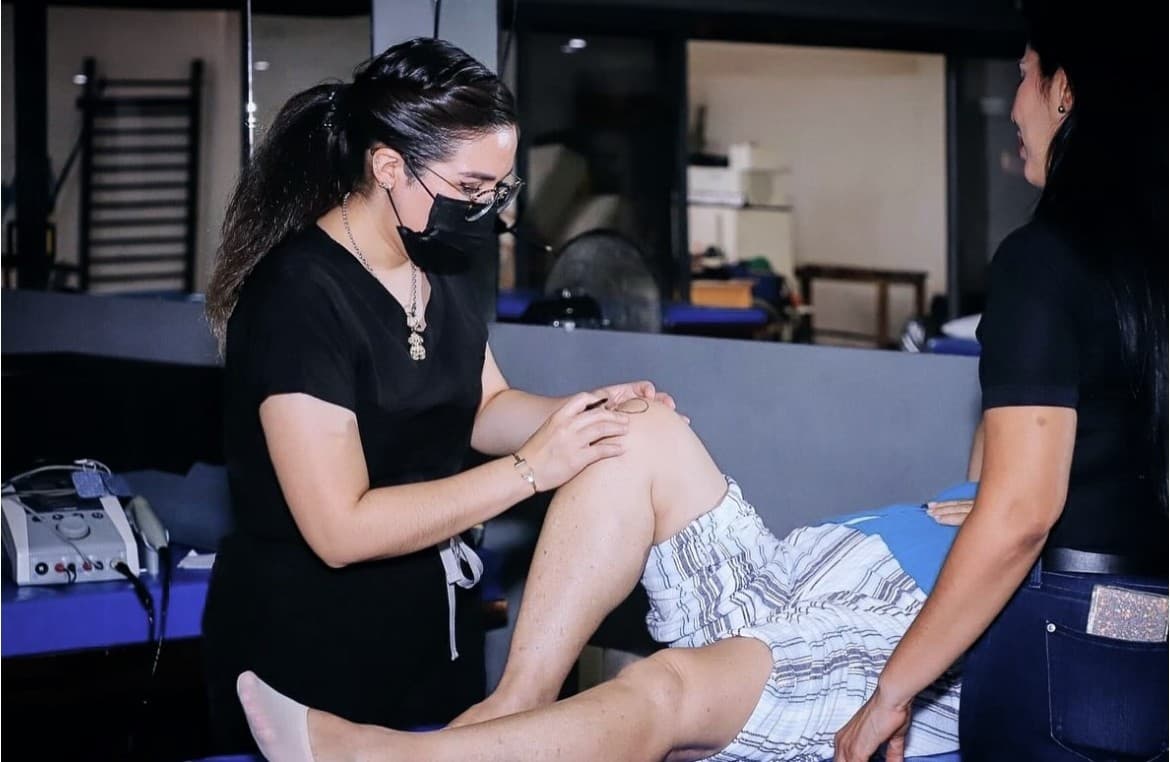
The plan is not copied from an MRI. It is built from history, examination and, when useful, ultrasound.
Meniscus: not always surgical

A meniscal tear is one of the most common knee injuries. Not every case needs surgery.
Many meniscal problems can be managed conservatively and, in selected patients, with a regenerative approach when the evaluation allows it.
In that setting, prolotherapy seeks to stimulate the body’s own repair mechanisms and may help to:
- Reduce pain and inflammation
- Improve stability and function
- Support the tissue-repair response
- Avoid or postpone surgery when surgery is not required
Each knee is different. Sometimes the knee locks and you cannot fully bend or straighten it, or an injury compromises stability. That is not managed the same way as degenerative joint disease. In those cases we recommend assessment by a trauma and orthopedic specialist.
Osteoarthritis and joint degeneration
In degenerative joint disease, easing the symptom is not the same as changing the joint’s biological environment. That is why the visit distinguishes:
- what is aimed at relief (for example, well-indicated hyaluronic acid viscosupplementation)
- what is aimed at a repair stimulus in ligaments, tendons or periarticular tissue (prolotherapy or other protocols)
Sometimes they are combined. Sometimes neither is indicated. That decision is clinical and biological, not a package.
How the knee is assessed
History
Onset, sport, work, previous surgery, what has already been tried.
Examination
Alignment, ligament stability, the meniscus and the chain (hip and ankle included).
Studies
Review of studies the patient brings; the isolated image is not treated.
Ultrasound
In clinic when it helps locate fluid, tendon or an injection target.
Plan
Observation and rehabilitation, ultrasound-guided intervention, or surgical referral if the case requires it.
Do you already have X-rays or an MRI of your knee?
Send them on WhatsApp with what you feel. We review your case before booking and tell you whether a visit makes sense. That guidance is not a consultation or a diagnosis. If you do not have recent imaging, we tell you which studies to get.
Treatments that may be considered
After the evaluation, and only if there is an indication:
- Prolotherapy
- Viscosupplementation (hyaluronic acid)
- Ultrasound-guided injections
- Growth factors (platelet-rich plasma), when the case justifies them
- Arthrocentesis if fluid needs to be drawn
- Combined work with rehabilitation
None of the above replaces surgery when surgery is indicated. Sometimes the knee locks and you cannot fully bend or straighten it, or an injury compromises stability. In that case, the patient is referred to trauma and orthopedics.
What we do not promise
Results vary. There is no magic number of sessions. A meniscus is not “regenerated” in one visit. Campaign prices are not published and avoiding the operating room is not guaranteed. Expectations are discussed clearly in the consultation.
Frequently asked questions
Does every meniscus tear need surgery?
No. A meniscus tear is common, and not every case requires surgery. Depending on the type of injury and the symptoms, some can be managed with conservative care and, in selected patients, with a regenerative approach. Sometimes the knee locks and you cannot fully bend or straighten it, or there is an injury that compromises its stability. Then a specialized evaluation is needed. In those cases, we may recommend assessment by a trauma and orthopedic specialist.
What is the difference between prolotherapy and viscosupplementation (hyaluronic acid)?
They are different treatments that can complement each other. Viscosupplementation consists of placing hyaluronic acid inside the joint, mainly to improve the joint environment and help ease pain and discomfort associated with joint degeneration. Prolotherapy, by contrast, seeks to stimulate a repair response in structures such as ligaments, tendons and entheses. Entheses are the zones where these tissues attach to bone. In some patients, combining both therapies can be useful because it addresses both the joint itself and the structures that support and stabilize it. The combination and the number of applications depend on the injury, the symptoms and each patient’s evaluation. They do not do the same job, but they can complement each other within a personalized treatment plan.
What imaging do I need for the evaluation?
Ideally, X-rays of the painful area (knee, hip, shoulder, spine or other) taken within the last year. If you already have an MRI or ultrasound, those help too: share them on WhatsApp before your visit. If you do not have recent imaging, we tell you which studies to get before booking.
Do I have to come in to find out whether this treatment is right for me?
Not necessarily. We know that getting around can be hard when you are in pain or have limited mobility. With your symptoms and your imaging, we can guide you on WhatsApp about whether a visit makes sense. That guidance is not a consultation or a diagnosis: the treatment decision is made at the consultation, after the physical exam.
How much does the consultation cost? And the treatment?
The evaluation visit costs MXN $500 (Mexican pesos). Treatment (prolotherapy, viscosupplementation, injections or another procedure) has no fixed price: it depends on the area, the procedure and the number of sessions you need, which are decided at your evaluation. Before starting, we tell you the cost of your plan.
Further reading
Supplements for joint pain: what the evidence says
Some supplements have been studied in people with joint pain; many others only in the lab. Which ones, and what to check before taking them.
Not every meniscus tear needs surgery
A meniscal tear is common. That does not make surgery the default next step.
Book a visit
Care in Guadalajara and Mexico City, by appointment.
Guadalajara: Bari Medical Center, San Juan de Los Lagos 21, Vallarta Poniente, 44110 Guadalajara, Jalisco, Mexico. Monday through Saturday.
Mexico City: Medical San Francisco, Rosa María Siqueiros 229, San Francisco Culhuacán, Coyoacán, 04420 Mexico City, Mexico. One week a month; ask us for the dates on WhatsApp.
You don't need imaging to message us; if you need any, we'll tell you which.
Want to tell us about your case first? Answer a few questions about your pain